Sunday, July 17, 2016

17.July.2016 (Day 42)

 Some things will never be tamed


If yesterday was cold, today was absolutely frigid. I was in the lab most of the day but any foray outdoors was quickly met with a scarf and jacket.


I’ve been told I’m rather lucky, in ‘normal’ years it gets this cold in early to mid-June (right about the time I showed up) and lasts for 30-45 days (before getting sweltering hot and muggy again). So I actually had pretty good weather for most of my time here, all things considering.

Another ‘plus’ was that this was an abnormally weak wet-season. For a biologists studying hydration in wild animals, it has really been a win-win.


All good things must come to end though.


Tonight was undoubtedly my worst snakin’ night yet. I still managed to find 2 more animals (getting closer!), but I can feel it in the air. Things are hunkering down and waiting it out. Animals are not moving.


I haven’t had a near-collision with a roo in over a week! Clearly something is off.


The animals that are out seem sad…


I’ll never let go Jack


Sleepy…


Two-lined dragon (Diporiphora bilineata)


Or generally nonplussed


Bynoe’s gecko (Heteronotia binoei)


The only animal that still seems to have a spark is one we tried to catch for the lab to show off to school groups that come through. He’s escaped half a dozen times already and is generally not very happy about his situation. I think we’ll let him go in the next few days.


Frilled dragon (Chlamydosaurus kingii)


I’m still not ready to give up though, not when I’m so close. Nine more snakes until data collection is complete. 


Nine more to go. 


As the great musical geniuses Europe (how dare you to even think otherwise) would say: It’s the final countdown.


Saturday, July 16, 2016

16.July.2016 (Day 41)


Winter is coming


The weather has changed since I returned from Cairns. The first few weeks I was here the days were hot and humid and the early night was about the same. Even though June/July are considered ‘winter’ in the top-end, it certainly didn’t feel very cold.

This last week, however, the climate is remarkably changed.


Not only are the days very mild, but by the time the sun goes down it’s officially jacket weather. I even found myself wearing the long-johns I had regretted packing the other night!


With a change in the weather also comes a change in the wildlife, especially the snakes I’ve been so desperately searching for. As ectotherms, both the water and children’s pythons show a drastic reduction in activity when the cold comes. When I first arrived there was a good chunk of time each night (~7p-10:30pm) when the snakes were out. The low was normally around 21C (70F).


These days I have from ~7:15-8pm before everything goes quiet and the temp at 10pm last night was 10C (50F) with a chilly wind blowing off the wetlands.


I’m admittedly getting anxious about my remaining time here, especially finding the remaining snakes I need.


As of this morning I’ve captured and sampled 120/120 cane toads; 68/75 water pythons; and 20/24 children’s pythons. I’m close, so close I can taste it.


Speaking of tasting it, funny/tragic/disgusting story –


Water pythons are very mellow on the aggressive-snake scale. I’ve encountered a few ‘biters’ but over 95% of them have been very apt to allow me to grab them (although they all get pretty aggressive when you stick their head in a tube and put a syringe in their heart).


They do have one defensive behavior, which I would argue is even better than being bitey.


They shoot excrement all over the place when they’re scared.


I’ve learned to keep their business-end concealed in a bag so their poo/pee doesn’t get all over the floor, lab, equipment, and my person. Today however I made a bit of an error.


The culprit


I think I was just so excited about this guy; he was almost 2 meters long and had a beautiful sheen to him. My excitement soon abated, however, when he gushed a potty fountain on:


My chest


Neck


Chin


And


Into my mouth…


What the (expletive), you (expletive), (expletive) what the (expletive) is wrong with you snake?!?


Ugh.


Because it’s petal to the metal, I’m afraid the blog might suffer some and the animal pictures might decrease. It’s all hands on deck and full speed ahead.


Friday, July 15, 2016

15.July.2016 (Day 40)

Bananas about Goannas


I can’t stress this enough, fire is as much a part of life in the NT as trees and dirt. If my pictures have somehow failed to do it justice I have to make it painfully clear: everything up here burns at one time or another.

No matter how hopeful I am for a ‘new and improved’ field site, I need to accept that, sooner more likely than later, it’s going to burn down.


There goes the neighborhood


A lot of the plants and wildlife and amazingly resilient. I doubt this landscapes has always burned down every year like it does now, but most things around here are remarkably adapted to avoiding fires and eventually returning (and thriving) in charred landscapes.


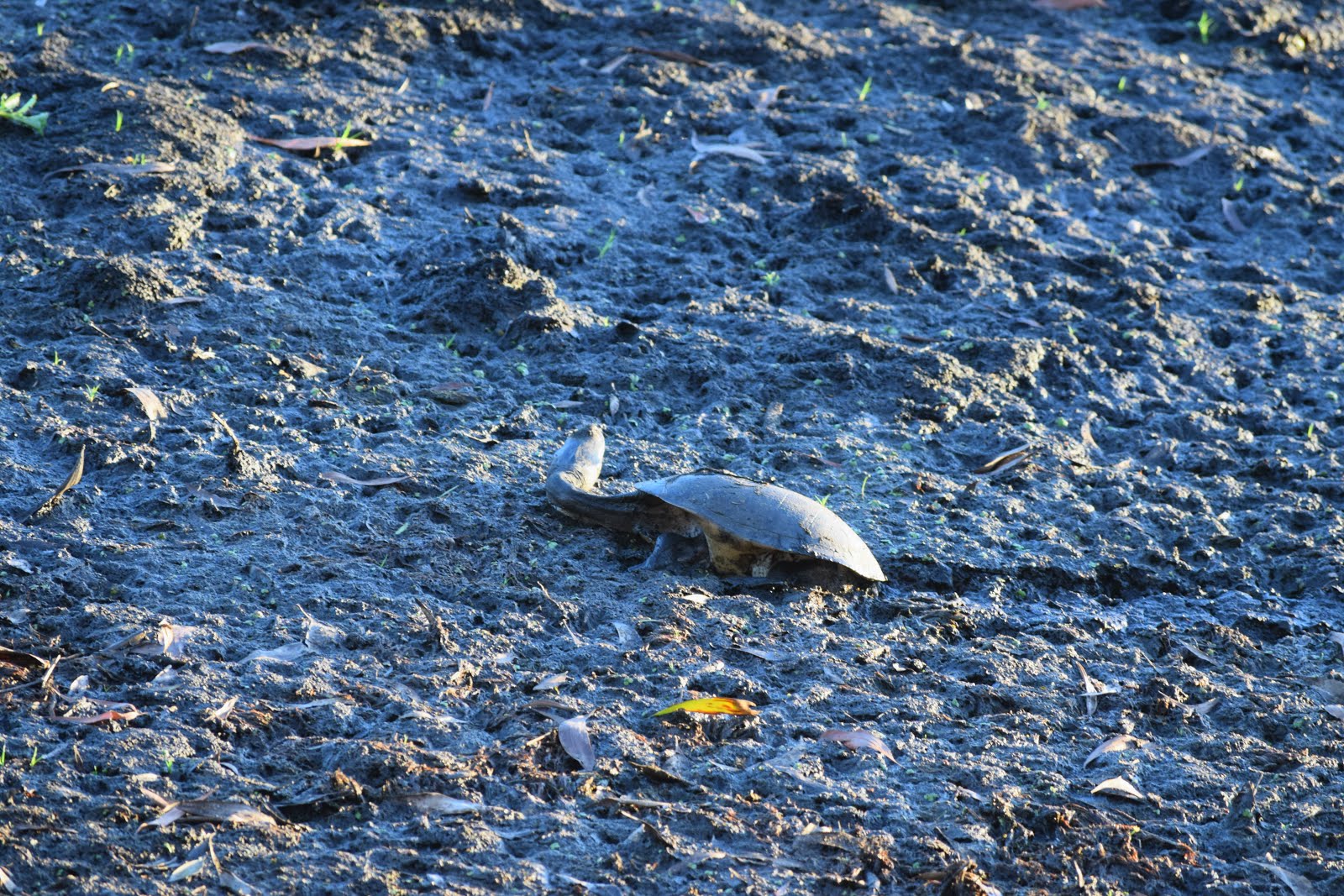
Eastern long-necked turtle (Chelodina longicollis)


Other individuals?


Not so much.


You’ve lost some weight


Many of the plants look like they do better after a blaze comes through. And the difference between NT fires and CA/AZ fires is that they happen so often. Most of the undergrowth doesn’t have time to stack up and turn into an 8 billion degree inferno that scorches half the city.


I’m guessing most of the animals just pack up shop and move out of the way.


Others choose the lazier method a hitchhike on unknowing biologists.


Jumping Spider (Salticus scenicus)


These little guys really seem to defy gravity, and all reason, when they’re hoping all over your pant leg. Walking around in fire-ey areas (yes, I made up a word, a place currently in the process of smoldering away) is a sure way to get you covered in these spiders. Every time they jump they’ll release what’s called a lifeline which is a single, almost invisible strand of ultra-durable silk. If the jump fails it can quickly pull itself back to its original position. They use their back legs (3rd and 4th pair) for jumping (plus avoiding panicky hand swats) and the front legs for pouncing on prey. Pretty sweet.


I went back to the same hole I found six water pythons last night to release my captures.


And bingo, two more males in the same area!


I don’t know if there are multiple females in the hidey-hole or the stank (pardon my vulgarity) of the female from last night just kept callin’ ‘em.


While looking for even more I could hear something shuffling about.


Another male per chance? Couldn’t be, too good to be true.


Even better.


This may not excite you the way it does me, but seeing this shape gets all my cylinders fired.


I was not about to reach my hand in there to pull this little lady out, hopefully you remember how large the male was (I only know it’s a female because I saw the big male courting her a few weeks ago, sorry no photos)


Floodplain goanna/Northern yellow spotted monitor (Varanus panoptes)


Luckily some gentle prodding got her turned around so I could get a good look at her face. Marvelous!


What big eyes you have


It’s so great to see a (presumably) mating pair in the area. They’ve taken such a hit since the cane toads rolled through and it would be a real shame to have such a magnificent creature gone from the area.


She looked in pretty good shape too.

Except she did have a tick on her neck…

And on her eye!!!

Gross


I’ve learned another very important lesson as well. ALWAYS look before you lay down to try to get close-ups of animals. You really never know what you’re going to being laying on.


Giant snappy ant (Odontomachus turneri)


I’m often confused on where common names come from.

No questions here.

Giant, check.
Ant, looks right.

I would only add outrageously ahead of snappy.


Lesson learned. I’m going to nurse my wounds.

Thursday, July 14, 2016

14.July.2016 (Day 39)

Tall drink of water


I have a riddle for you.


You have a room (four walls, a ceiling, and floor). There are windows, but they’re closed. There are no holes in any surface and no possible way in or out.


Riddle me this, riddle me that.


How does this happen? (windows were closed pre-picture)


If you’re staying the night, you should know I’m a cuddler


I’ve mentioned before the pros and cons of living at a field station (aka living with wildlife), but I am dumbfounded how this bird made it into my room. I talked to my housemates and they said my door was closed all day and no one went in to sabotage it with a wild bird. I really shouldn’t think about it too much or my head or explode. But seriously how did it get in there?


I don’t know who was more startled when I opened the door. I think we both saw each other at the same moment. I’m just glad there’s no recording of my hysteria. Bird flapping around the room wildly, me flailing my arms around madly try to…what? Catch it?


There’s more holes in window screen than the plot to Prometheus (too nerdy?), so after calming down I simply opened them up and away it went.


Whew. 

Crisis averted.


Ignoring mutant-ghost-birds that can fly through walls, the day was filled with water pythons.
Twenty-six snakes, of any variety, to bleed in a single day is a daunting task. I should also include that most of the snakes are over 1.5m (~5ft) and weigh around 2kg (4.5lbs).

Luckily I’ve learned that no amount of duct-tape will hold these beasts down and the best method to get a sample from them solo is to coax their head into a pvc pipe, sit on their midsection oh so gingerly, and restrain them long enough to get a few quick drops of blood.

That about sums up my day.


It was a biggie for my lab snakes though, after almost 5 weeks without it, the water pythons finally got access to their namesake.

Spa day


I hope I’m not giving the wrong impression, that I’m just depriving these poor animals of much needed water. Most of them could probably go another 3-4 weeks and still be okay!

So far in my dissertation I’ve examined how immune function in rattlesnakes and children’s pythons interacts with water-balance (FYI as they dehydrate they do better). But rattlesnakes live in a pretty hot and dry climate (it’s about 109F in Phoenix right now), and children’s pythons are normally found in the drier habitats around the top-end.

Using water pythons (an animal thought to spend a good portion of their lives in or immediately around water) to do a similar experiment will (hopefully) be able to tell me a lot about how far this dehydration = improved immune performance idea goes.


Fingers crossed.


There are many guardians of the night at my field site. Some are of the sluggishly slow I-refuse-to-move-no-matter-what-you-do variety.


You are the worst


And others are of the I’m-going-to-crawl-up-your-shirt-and-trick-you-into-thinking-I’m-a-giant-spider type.


Walking stick (Ctenomorpha chronus)


Even though I haven’t heard it yet, my favorite nighttime custodian has to be the barking boobook


Barking owl (Ninox connivens)


Their call has been described as a ‘shrill woman-like scream of great intensity’. The local people have a legend about a terrible swamp monster called the Bunyip that preys on women at night. The cries and shrieks coming from the swamps, rivers, and billabongs are said to be that of the fearsome Bunyip after it has captured a healthy meal…that or it’s just an adorable owl.


Wednesday, July 13, 2016

13.July.2016 (Day 38)

Homecoming


It feels good to be back in the NT, as spoiled as I was in Cairns, the top end feels about as close to Arizona as it gets over here. 


Real salt-of-the-earth type folks around here.


I was even given an extra special welcome present.


The new normal


The scars of fire are everywhere in the NT, but for every charred ecosystem there are just as many re-grown landscapes that are the epitome of the area I’ve been working in all summer.


NT car park


Because tomorrow I’ve got heaps of work to do (with the water pythons I still have slowly dehydrating in the lab) I told myself I wouldn’t get too many snakes at night…


But I just can’t help myself. I had to go say hello to some old friends.


Dumpy tree frog (Litoria caerulea)


And find a few some new/familiar friends.


Children’s python (Antaresia childreni)


Because I have 15 dehydrated water pythons to bleed in the morning, my goal was to only grab a few. After finding 5 pretty big ones I decided to head back to the station and call it a night.


Not so fast…


Water python mating ball


I can’t find any evidence of this behavior in water pythons, but I’ve heard some stories from Dr. Shine that he’s seen it before. This is called a mating ball and is fairly common in garter snakes and water snakes. It’s hard to tell from the photo but there are five males and one giaaaant female in this little hole (and another male that slunkered into the back out of reach).


I don’t know enough about it in these species, but I assume all these males were lured to the site by the females pheromones, and rather than fight amongst each other they’re just trying to get a piece of the action (so to speak) and pass on their genetic material.


Now I have 26 water pythons to bleed in a day, and a whole mess of data entry to finish. Enough blogging, back to work!

Tuesday, July 12, 2016

12.July.2016 (Day 37)

Don’t go chasing


Not much to report about today I’m afraid. It was my last full day in Cairns and I had plenty of work, packing, and data entry to do (bleh). The one plus is that I’m no longer sharing this dingy hotel room with 10 cane toads constantly trying to escape their Tupperware enclosures.


Silence truly is golden.


With only a few hours of daylight to spare I thought it best to stay local and go to a recommended water hole to search for a few rare frogs that live in and around raging waters (mist frog and waterfall frog), neither of which I was able to find.


The rainforest of far north Queensland are about 0.2% of the land in Australia. In that small area they hold:

40% of all birds
35% of all mammals (including 30% marsupials, 60% bats, and 25% of the rodents)
30% of all frogs
20% of all reptiles
60% of all butterflies
65% of all ferns
21% of all cycads
37% of all conifers
30% of all orchids
And 18% of all Australia’s vascular plants

With such incredible biodiversity it’s amazing that there aren’t animals flying, crawling, hopping, and moving all over the place. But like I said earlier, the jungle is thick, really really thick. During a day in the bush you can see an amazing diversity of animals.

Trying to find high numbers of just one species (besides cane toads that is)?

Not so much


While animals mostly eluded me on my stroll today, I was amazed by the beautiful landscape in an area just outside of Cairns proper called Crystal Cascades.

This part of the country (especially the rainforest) gets a lot of rainfall. I’m talking a lot. On average over 205cm (~80in) of rain fall in some areas.


The result?


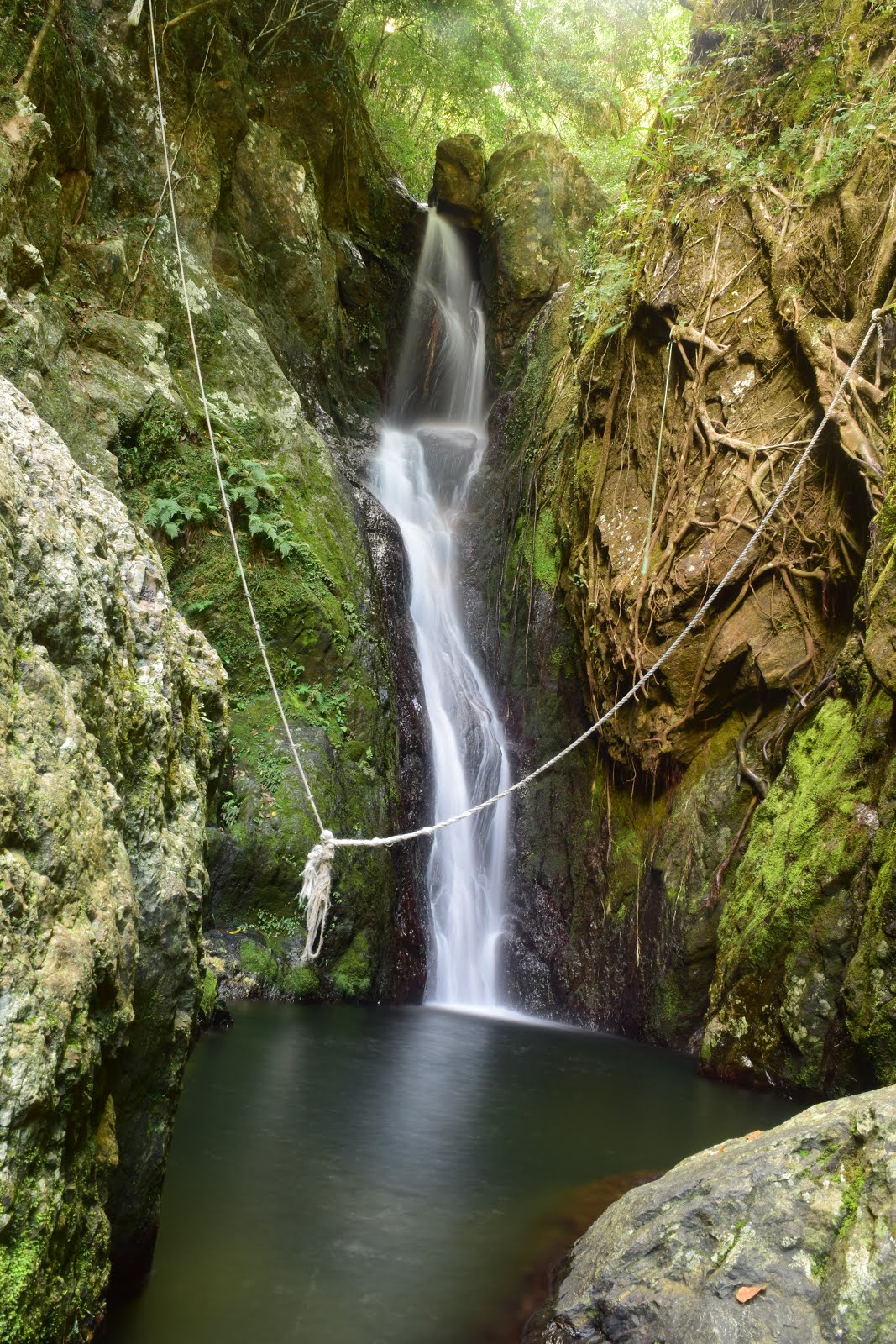
Beautiful waterfalls!


There were small cascades (where I was hoping to find the frogs I was after)


And raging torrents too slippery for clumsy biologists wandering about on their own.


Most of them fed into large pools that the locals use to cool of in the heat when the ocean is full of stinga's (jellyfish).


Some of the water erupted from between the rocks like a busted water main. And this is during the dry season!


Tomorrow its back to the NT for me. I'll be sad to say goodbye to my temporary home in this tropical paradise but there is still plenty of work to do. I've caught all the cane toads I set out to, however I still need to catch 37 water pythons and 7 children's pythons, and start/finish all the lab work.


It feels a little daunting but I'm up to the challenge.


Plus, when this is all over, I'll be given the best reward and finally see the two people I miss most in the world...


Monday, July 11, 2016

11.July.2016 (Day 36)

A lack of focus wins out in the end


I love to put pictures up of the animals I see and describe some of the cool things about them. 


But I don’t want to fool you in any way. 


At least 50% of the critters I actively search for remain elusive. Of the ones I do see, at least half the pictures turn out to be junk.

Today, for example, I headed on a little road trip based on some tips from a friend-of-a-friend who lives in the area. He pointed me in the direction where I could search for a very specific snake (Amethystine python), which I didn’t find.

And then I quickly became obsessed searching for an even more elusive animal (Platypus) which I also didn't find.


Classic skunking, sort of.


I’m very hesitant to tell people I’m a herpetologist (reptile and amphibian expert) because a) I’m not actually very good at spotting them, b) I’m afraid of getting pigeon-holed as a ‘herp-guy’, and c) I get far too distracted with all manner of living creatures to ever just be on the look-out for snakes and amphibians.


Its days like today that work in my favor and I truly value the education/training I’ve received. Most aspects of the natural world can grab my attention and when the animals I’m really hoping to see aren’t out, it’s comforting to know I can still marvel at the Australian landscape (although I still really really really want to see a Platypus).


Red-throated rainbow skink (Carlia rubrigularis)


Most of the lizards I see every day are skinks. And most of them look exactly alike! Fortunately today I was up in an area called the Atherton tablelands which has a very useful online skink guide (the truly is something on the internet for everyone). I can honestly say today was the first time I was able to correctly identify one of these little buggers (and x2 no less).


Australian bush-turkey (Alectura lathami)


Easily one of the ugliest darn birds I ever did see. Not actually related to the delicious turkeys consumed en masse every November. These birds love to squabble through the leaf litter confusing curious biologists into thinking something far more interesting is wandering about.


Black jezebel (Delias nigrina)


If I were only looking for snakes and egg laying mammals (which were admittedly first on my radar) I never would have noticed these beautiful butterflies. I didn’t try one myself, but the bright colors are there to warn would-be predators (I assume birds) not to eat them because of their rotten taste.


Eastern water skink (Eulamprus quoyii)


As I said before, another skink for the record books! Woo hoo, I’m 2 for, errr, 100 (?). If this hadn’t been basically sitting in the water I never would of gotten anywhere with a google search: “Far north Queensland AND skink AND yellow stripes AND mottled belly AND wtf is it?!?”


With so many skinks running around in the leaf litter, I was overly hopeful of seeing the python I'd driven out for. There certainly was plenty of food running around for them...


Musky rat kangaroo (Hypsiprymnodon moschatus)


This picture is, once again, dedicated to my wife Kelly, a true blue rodentophile! This is not actually a rat though - it's the worlds smallest member of the macropod (kangaroo) family.


Bull kauri (Agathis microstachya)


These trees are look like they stood the same time as the dinosaurs. In fact, during the Mesozoic era (250-65 million years ago), relatives of the kauri dominated the warm and moist landscape.  The two in the photo are a pretty famous pair (famous as far as trees go I suppose), they’re 50 meters (160ft) tall, and 2.8 meters (9ft) in diameter!


The area that I'd been pointed to is called Lake Barrine. And wouldn't you know it, I finally found a fresh body of water without salties in it...and it was freezing. Still pretty good to look at though.

Lake Barrine, Queensland 


There was plenty to see around, on-top of, and inside the water too.


Long-finned eel (Anguilla reinhardtii)


The life-cycle of these animals are amazing (not the best photo, but like I said, that water was freeeezing). Baby eels are born in the ocean and swim up river where they eventually have to crawl, on land, ~700 meters to reach the lake. They live here, eating mostly other fish, for 15 years or so before they cross the land again to swim back to the ocean, lay eggs, and die.

Saw-shelled turtle (Myuchelys latisternum)


Normally this is the part of the blog where I would start to lament how, yet again, I'd found an absolutely minuscule example of a large animal. In this case though? These two are pretty darn cute. This is another rare example of an Australian animal that can eat cane toads too, so kuddos to them.


Green fig (Ficus virens)


Another amazing tree (plus their fruit is delicious), in that they start out as a seed only a few millimeters long (about the size of a sesame seed) and after ~500 years turn into this massive behemoth. The crown of this particular tree (the cathedral fig) is 2000 square meters…that’s about the size of two Olympic swimming pools. The leaves alone weigh 1000 kg (~2200 lbs) which is the same as a small car (or ten of me if you wanna be a jerk about it).


Red-bellied black snake (Pseudechis porphyriacus)


Another elapid for the adventure books. While not as dangerous as some of the other Australian elapids, I would still avoid a bite from one at all costs. Their venom is a mixture of myotoxin (destroys muscle), neurotoxin (destroys nerves), and hemolytic (destroys red blood cells) proteins. Luckily for this biologist, they’re not particularly aggressive and I wasn’t too worried to lean in for a close-up (most of the other ‘famous’ Australian elapids I would not get so close to).


One last thing I forgot to mention. There's no poison oak here and there are no ticks (two of my least favorite things ever!...behind Vegemite). There are however.


Lurking in every damp pile of leaves.


Waiting for any unfortunate doofus.


Leeches!


Jawed leech (Gnatbobdellida libbata)


Finally my gift/curse of finding small examples of animals has really paid of (aside from th cute baby turtles of course). These blood suckers can get up to 20cm (~8in) long!!! Their bodies are covered with receptors that can detect endotherms (produce their own body heat) by sight, smell, vibration, temperature, and they can even detect elevated CO2 levels. They release an anesthetic into the skin so you can't feel them bite and they also have something called hirudin that they release as an anti-coagulant.

This sucker (my dad jokes are getting really bad) found a nice cozy home behind my band-aid for who knows how long. Luckily their anesthetic makes it pain-free to pull right off, however the hirudin on my not-quite-but-almost healed foot wound really let it flow.


Most things in Australia aren't nearly as terrifying as I expected.


Leeches? No thanks.